|

|
 |
 |
|
| |
CA building restoration’s crews are highly experienced at the tuck pointing process and utilize special equipment to safely remove the mortar without damage to the adjacent brick or stone.
Tuck pointing originated in England in the 17th century as a cheaper alternative to gauged brickwork — which was the ultimate method of laying bricks, consisting of rubbing the stones to exact dimensions and perfect edges, then dipping them lightly into lime putty, providing a true 1/16" joint.
The word "tuck pointing" once referred to a specialized application of pointing that consisted of first sanding the bricks to a smooth, even surface, and then masking the original mortar joint with a thin one that matched the brick in color, usually red. One would have created up to this point the illusion of looking at a solid wall of clay, as opposed to a wall consisting of individual bricks.
Then, after having rubbed the red mortar with a piece of jute and dying the work to a uniform color, fine lines were cut with a knife into the "masking" mortar while it was still soft, in a rigidly symmetrical fashion to produce a perfect geometrical outline of each brick. At that point a fine, usually white, lime putty mortar joint was tucked over the lines and meticulously manicured, so as to create the illusion that the wall had been laid with perfectly rectangular bricks in a mortar bed as thin as 1/16th of an inch!
Experience and craftsmanship are needed to insure the materials match in color, consistency, aggregate size and mortar strength. We have experience, training and knowledge in tuck pointing.
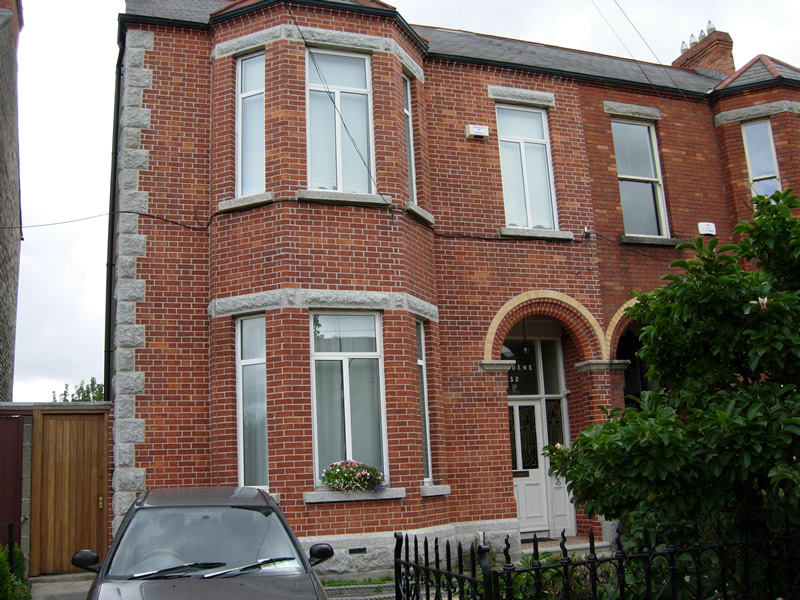
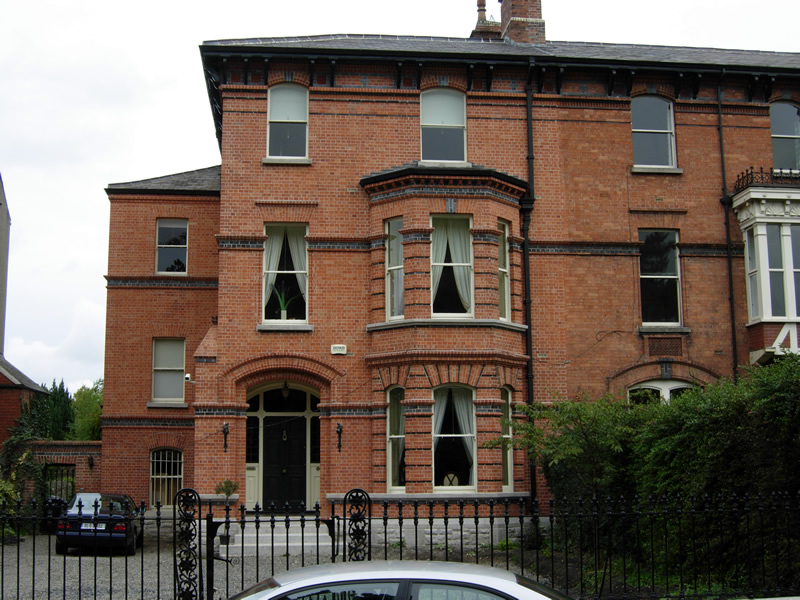
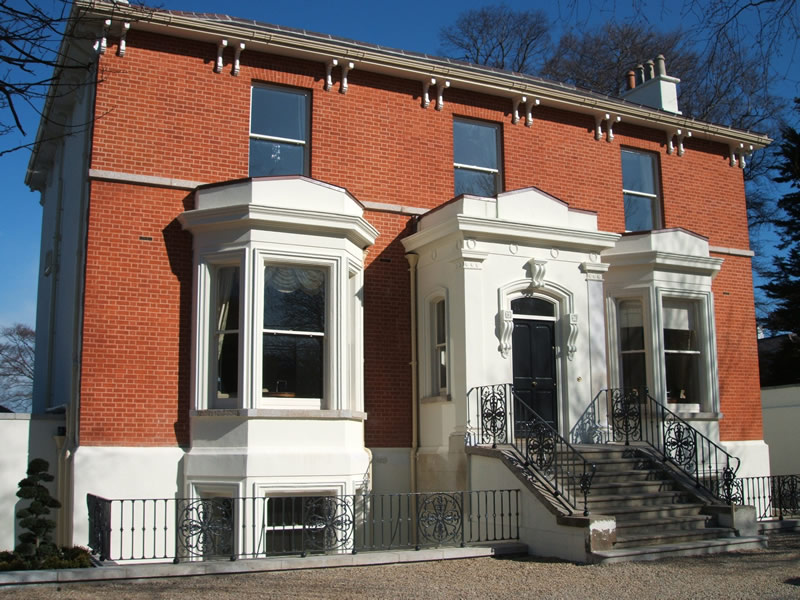
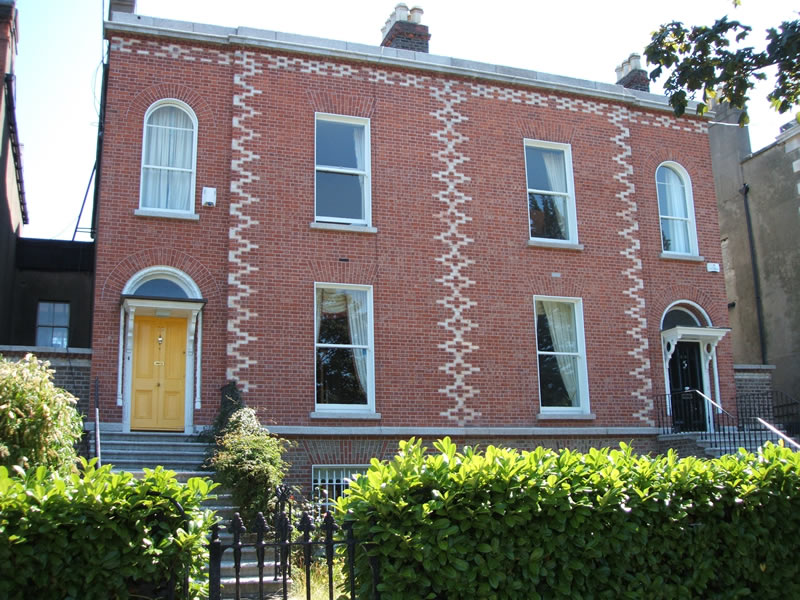
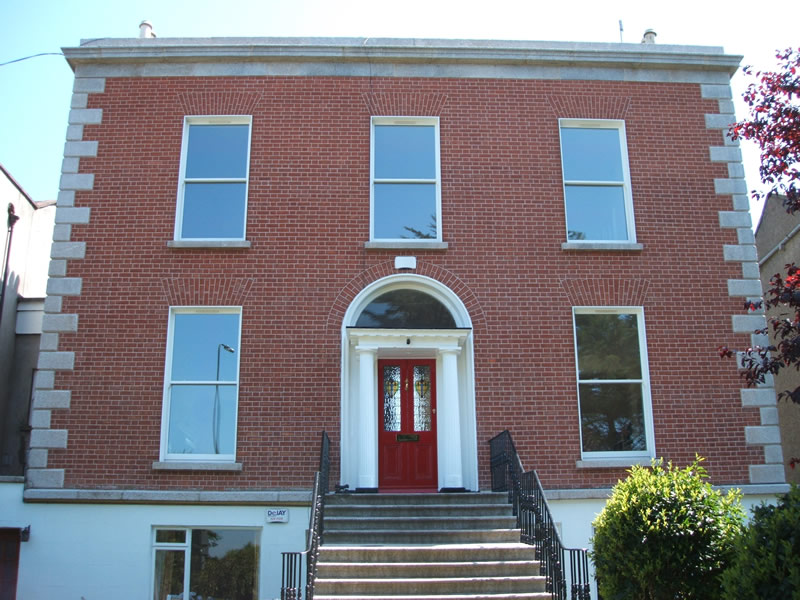
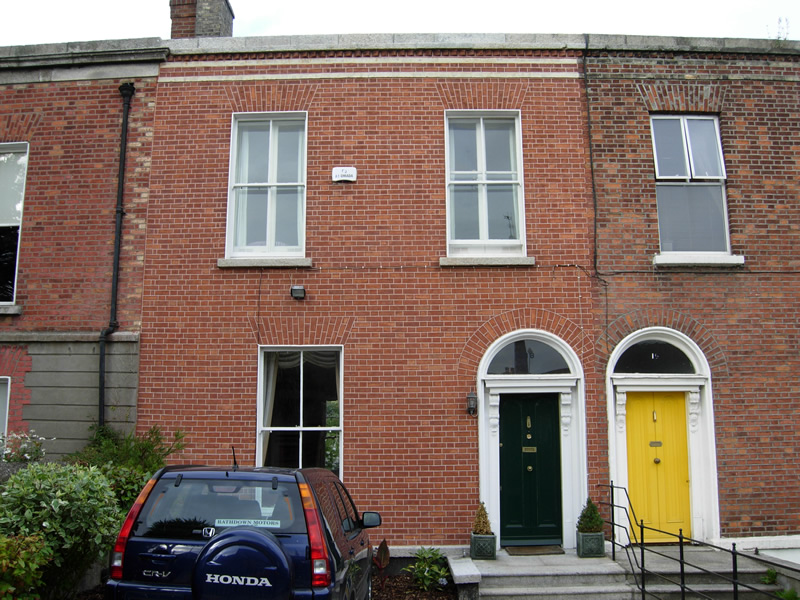
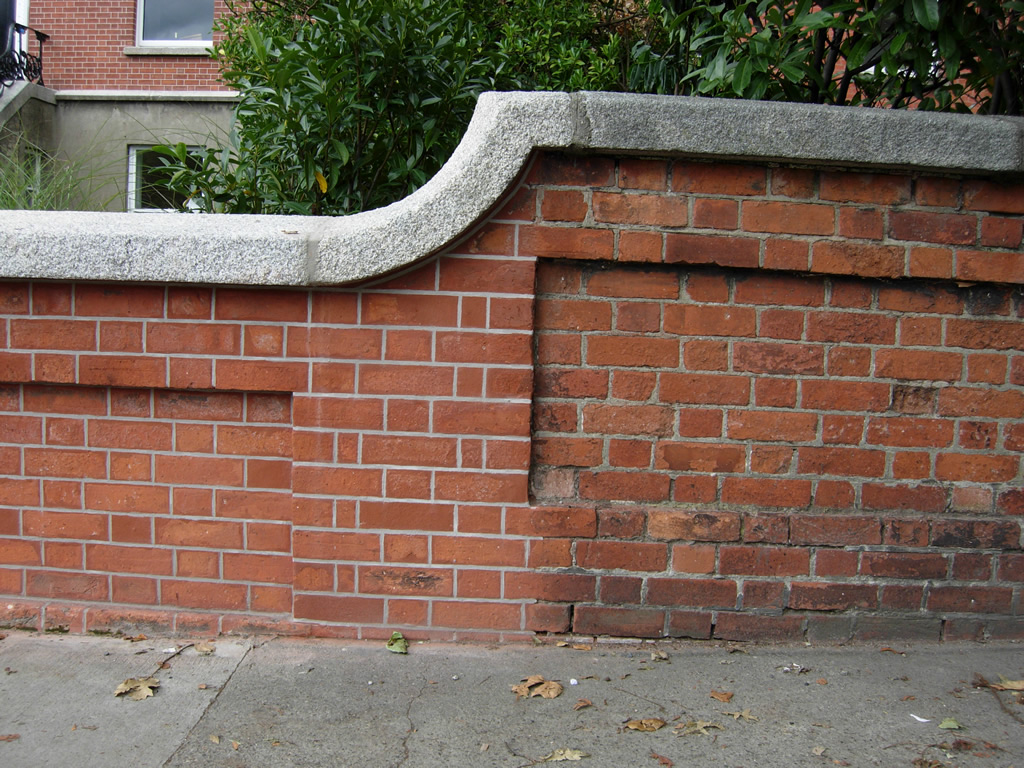
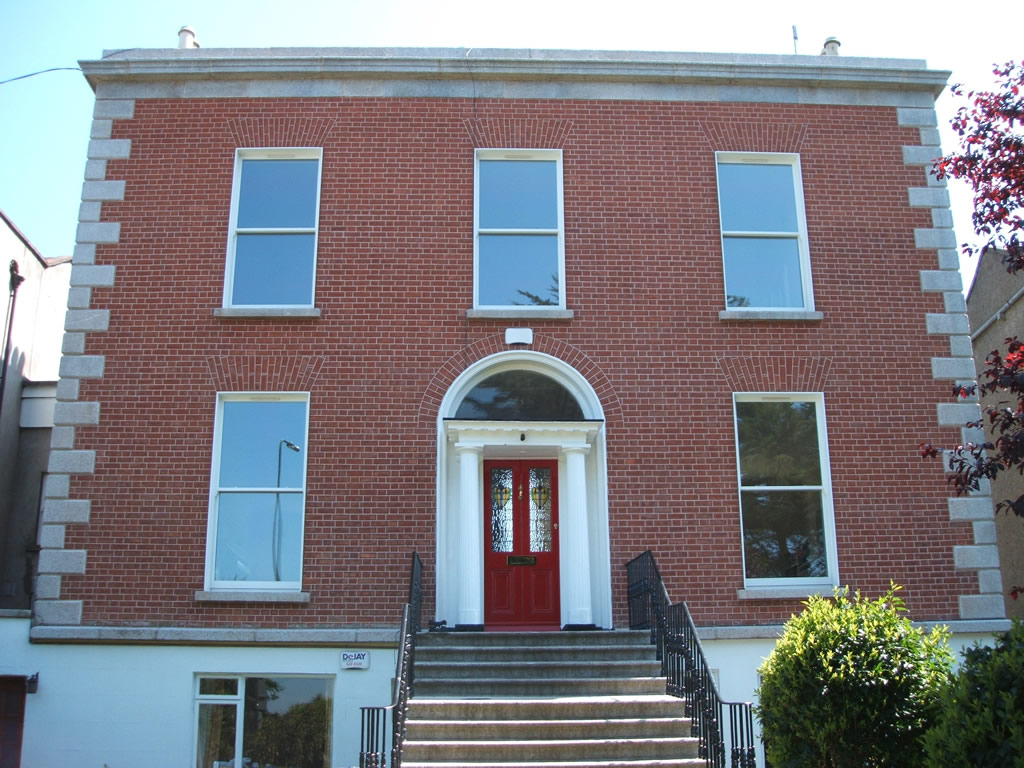
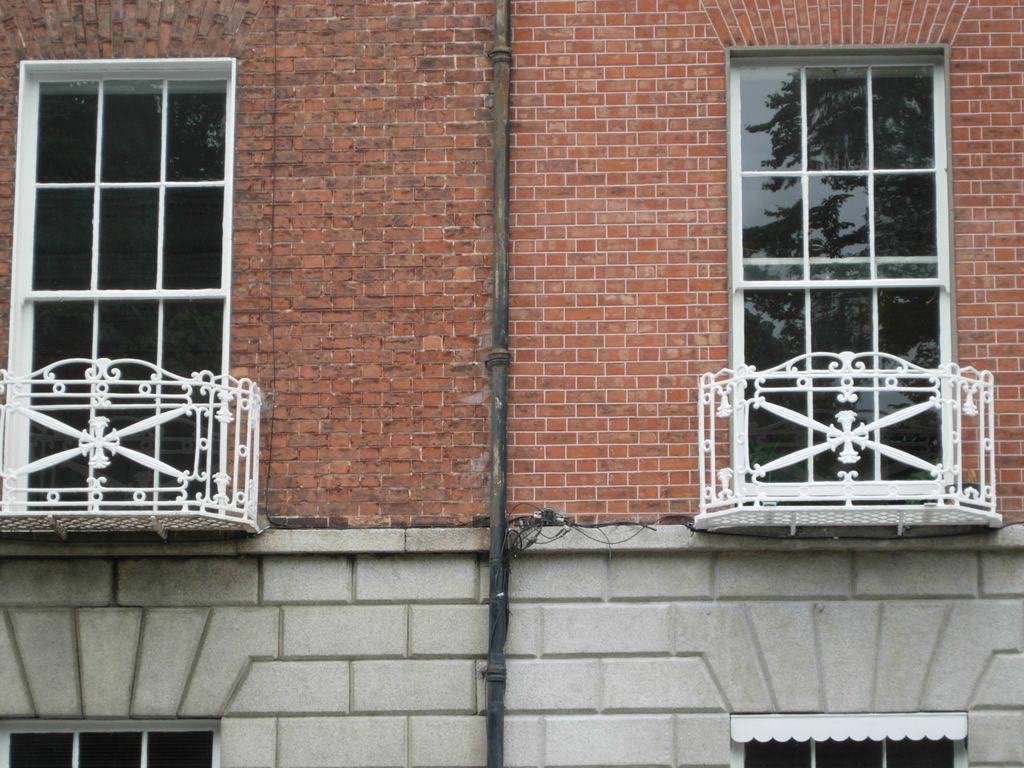
Those are examples of before and after work that we have carried out:
|
|
|
| Before / After |
Before / After |
Before / After |
|
|