|

|
 |
 |
|
| |
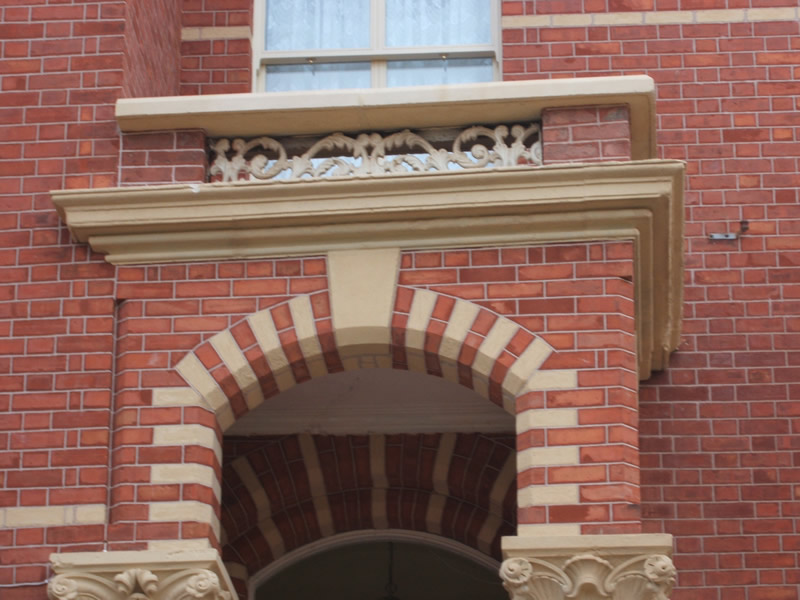
Brick, stone and granite are long lasting and durable materials which can last centuries with proper maintenance. Leaking roofs or gutters cause damage, when the water is allowed to collect or run over their surfaces. Water infiltration is the most common cause of mortar joint failure.
Deteriorated masonry can lead quite quickly to more serious structural problems.
When the masonry is damaged it must be rebuilt with matching materials, often a difficult task on a building which is centuries old. Proper material selection in both size and color is essential to a seamless repair that will blend in with the adjacent masonry.
There are several method to repair deteriorated masonry or chimney:
Composite patching – replacing the areas of deterioration with a specially formulated repair mortar that closely matches the color, texture and physical characteristics of the host masonry.
Dutchman patches – replacing small areas of deterioration with new masonry that is carefully shaped to precisely fit the void created as a result of removing the deteriorated portion of the masonry. Dutchman patches are usually done on stone rather than brick or terra-cotta.
New veneer – removing and replacing the exposed face of the masonry with new masonry.
Remove and Replace – removing and replacing the entire masonry unit with new masonry.
Retooling – reshaping the masonry unit in place.
Remove loose material and consolidate the remaining masonry – after carefully removing the loose masonry material, apply specialty treatments that will strengthen and consolidate the remaining masonry unit. The masonry is not restored, but rather preserved in its existing condition.
Choosing the best method to repair deteriorated masonry is a critical decision and should be done by a trained, experienced and competent professional. This will provide you with the peace of mind that the repaired masonry will not only look good, but will endure the test of time.
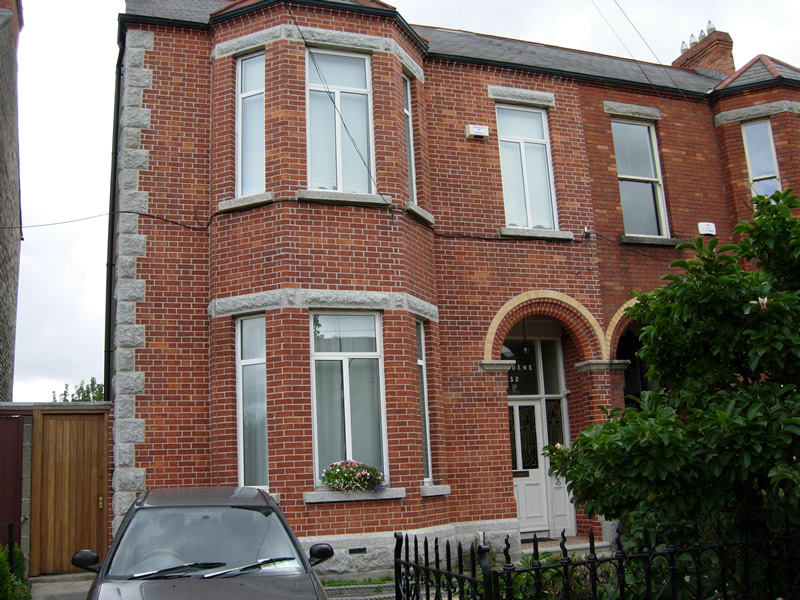
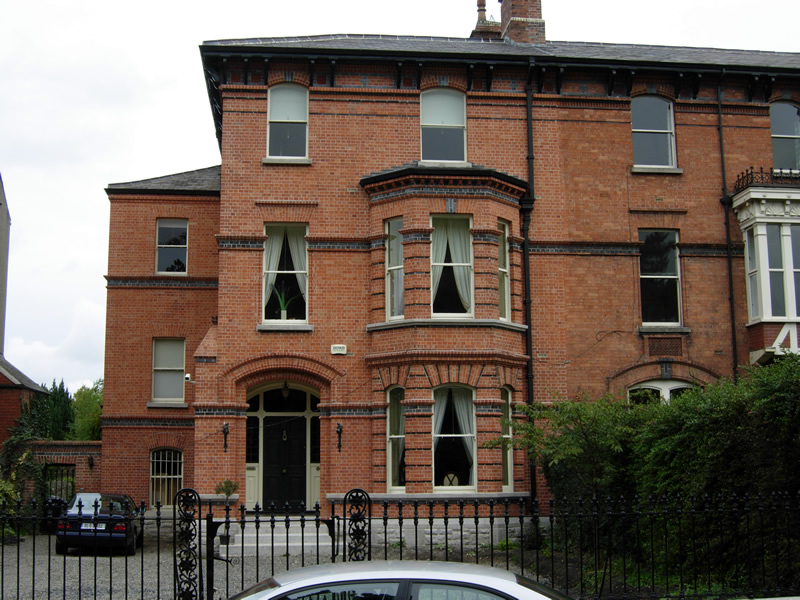
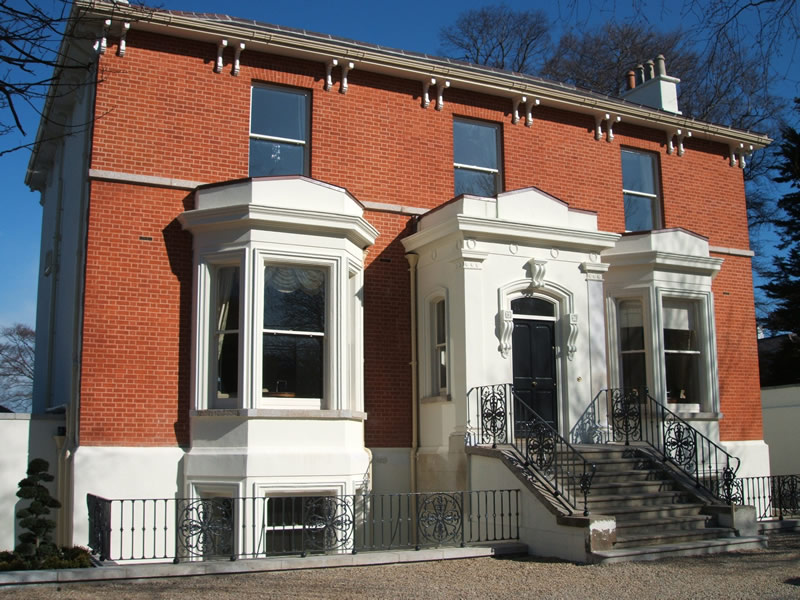
Example of our work
|
|